Showing posts with label Location. Show all posts

Film in Myanmar with Benetone Films


Myanmar (formerly Burma), is the largest country by geographical area in mainland Southeast Asia, a nation of more than 100 ethnic groups, bordering India, Bangladesh, China, Laos and Thailand. The country is one of the most magical and undiscovered destinations in the world; a golden land of breathtaking beauty and endless charm that is steeped in fascinating history, traditions and of course, war.

“Myanmar is the cool, arthouse film that’s a bit trickier but ultimately a richer experience.We saw things there no one has seen, or I haven’t seen in any documentary before. Yangon is this city with about 1,100 Buddhist temples and they are surrounded by farmland. There’s this incredible vista of trees and peeping above the trees are all these pagodas and temples as far as the eye can see.”
 - Dara O Briain and Ed Byrn, BBC


10 Tips in Searching Shooting Location

Original post is from KFTV

A successful shoot begins with selecting the right location. In fact, one of the most important steps in producing a high-quality video is scouting.


Most of the time we forget to check if the places we want to include in our video are actually really suitable for filming. But bear in mind that this process is as important as making sure your equipment functions.

Here are TEN essential tips that will help you when shooting out on location.

1. MASTER YOUR STORY. It is important to get familiar with your story plot so you can choose the best setting that will match every scene. This will serve you as a guide in selecting the best location. Always get back to the main reason why you are searching for a location: I have a story to tell my viewers. So, you don’t want them confused because of a not suitable location. Many locations will be available for you to choose from but there will be very few that will best fit your story. Story first before going out and scout.

2. TAKE DOWN NOTES. Get your pen and note ready-handy. You will need them as your best friends in scouting location. No matter how sharp your memory is, you have to take down all your observation as you go to every location that you want to check. You will come across many settings when you walk, drive, travel with family and friends or just even by observing. Places will have similarities, differences, advantages and disadvantages so you have to write all important points.

Along with your notes, taking photos or shooting video clip with audio observation will help a lot as actual representation of the area. After a long journey of travel, use your notes, gathered information, photos and videos to compare and contracts locations.

3. FORECAST WEATHER CONDITION. Natural environmental factors such as rain, snow, sun, wind and temperature are very crucial in selecting location. These may improve or destroy your output depending on your story line.

Do not forget that your shooting facilities are also sensitive to these factors. For instance, exposing video cameras to rain, beach wind, or even moisture from water fountains or waterfall may cause damages not only to the equipment but also to your output. Too much brightness and hot temperature cause by sunlight can also damage your equipment if left exposed for too long.

Moreover, cold weather or low temperature can drain batteries quickly. This is true to all type of batteries but some perform better than others. So if you really need to take some scenes in very cold temperature consider using external battery pack as well. This will give you a chance to warm your batteries under your jacket.

Make sure to be prepared for these factors to avoid serious damages to your equipment and to secure smooth flow during shooting.

4. PAY ATTENTION TO AUDIO IMPACT. Use your camcorder’s microphone to check sounds surrounding a location. Silence can contribute a lot in achieving great audio results in your film. Also test wireless microphones, boom mikes, and any other audio recording devices at the site so you can listen closely to any interference. Always remember that high- quality sound is very important in making a video.

Consider noise caused by the environment including traffic, running water, echoes, and even movements that your microphone may catch. Going back to your story, choose the location that best fit the scene and the sound that you need.

5. OBSERVE LIGHT EFFECTS

INDOOR . There are settings that provide lower or higher amount of natural light without the help of electricity. Looking back into your story, it is important to figure out the lighting capacity of every location. Indoor locations such as rooms, homes, function halls, auditoriums, churches and temples, have lower amount of lights. You can try sample shoots to figure out what’s best thing to do in the area. If you need more light, check every corner of the location. You can open windows and curtain blinds to add light. In some cases, you may also add light equipment or consider replacing light bulbs. Just make sure to coordinate with somebody who is in charge of the place.

OUTDOOR. Natural light in any open air locations is challenging because it changes in any moment at any time. Check whether your ideal location is exposed to full sun during daylight, or covered by a tree or building shadows. Remember the basics of camera and equipment protection: Do not expose too long in high temperature. Bright sunlight is not good to people’s eyes (actors and staff) and can also cause automatic camcorder lenses to underexpose shots because full sunlight can surpass light colored background. Small amount of sunlight can also be tricky since almost of today’s camera are producing not so good contrast in this outdoor condition. Consider those fully shaded location because it generally gives better result.

6. SECURE POWER SOURCE. It is always ideal to be prepared especially with your power supplies. Even you have multiple battery packs reserved, the need to check nearest electrical connection is essential for a smooth shooting. There are outdoor and indoor locations that lack power connection so you have to consider its availability in scouting locations.
You might be needing power supplies for you additional lightings, battery charging and even cellphone charging. A location that has enough power supply is an advantage.

7. CONSIDER SPACE. In scouting for location you also have to consider adequate spaces aside from the place that you will use as a background of your film. Simply put, do this for your production equipment. Indoors may have extra rooms for your things, dressing area, and place where other staff working behind the camera can stay. Make sure outdoor locations have enough space too, where you can set up your shooting gears. It is important that you can move freely in these areas for comfortable working environment.

8. CHECK NEARBY FACILITIES. Checking facilities around the location is essential to ensure smooth flow of activities during shooting. These include the availability of telecommunication signals for your mobile phones or payphone in case of signal outage, food chains/shops just in case you need food, banks/ATM if you need extra cash, electronic stores for electrical supplies, medical clinics/hospitals, fire, and police stations in case of emergency.
Knowing these facilities will help you prepare for any challenges that will come across during the actual shooting. Problems are unavoidable, but preparation is just within reach. Be ready!

9. DOUBLE CHECK PROSPECT LOCATION. When you have already prospected possible locations, you need to double check. Visit again the places that you want to include in your film to check whether they are still suitable for your story most especially during the time of the shooting. Remember that conditions of locations change inevitably depending on the season, time of the day and even the day itself.

Checking again the factors that you like about your prospected locations will answer the questions: Are they still the same? Or not anymore? Will they be fit for your story? Or no? Will you still use the place in your film? Or will you remove it?

Again, situation of a certain location depends in so many factors, so, rechecking its availability and appropriateness is really a must.

10. OBEY LEGALITIES. Some of the places that you would like to know more about will require you legality works so try paying attention to this. They might require you black and white letter asking permission so you can fully check the area, or some may require you permits before you can go inside a prospect location. Better know if there are legal requirements because this will give you the confidence of fully evaluating the area.

On the other hand, if you are not required of those things, it is always better to ask permission verbally. Many owners will help you if you will tell your intention and will even assist you until you are done.

Along with this, also ask if there are things you need to do for legality sake prior to shooting especially if you will be using public sites such as parks, highways, cemeteries, government offices and private owned areas such as groceries, residential houses, and others.

This is very important to avoid interruption by authorities because your shooting is legal.

Tips for filming in Thailand

Original post is from KFTV

Thailand is one of the most popular countries in Asia for filmmakers and not just because of low production costs. The territory has excellent infrastructure especially for production equipment, plus with picturesque views and friendly locals the nation has become a production hotspot.

Dozens of foreign films were shot in Thailand, including Hollywood movies: James Bond 007: The Man with the Golden Gun (1974); The Beach (2000); Around the World in 80 days (2004) and Bridget Jones The Edge of Reason (2004) to name a few.


In 1923, Miss Suwanna of Siam, a romantic film, written and directed by Henry MacRae was filmed in Thailand starring Thai actors, making the project Hollywood’s first co-production with the country. After this filmmaking flourished and still continues to attract foreign film producers. In recent years, Bollywood projects have also chosen Thailand as the preferred location for their movies.

So if you are planning to shoot a film in Thailand, here are some helpful tips to keep handy.

  • Shooting Permit – Remember shooting without a permit is a violation of law. This permit must be taken from the Thailand Film Office. Filmmakers are required to hire a Thai coordinator that is officially registered with Thailand Film Office, Office of Tourism Development, to help obtain permits as there are procedures to follow both before and after it is granted. They can also help out in contacting local crews you may need for your production.

    However, separate permits are issued for specific locations such as, National Parks and Historical Parks; you should arrange this if necessary in advance of shooting dates. You can apply for these permits at One-Stop-Service Centre for other types of productions e.g. Feature Films, Docu-dramas, TV dramas, Mini-Series and Reality Shows. Applications should be made at the Thailand Film Office at least 14 days (10 working days) in advance as script approval must be sought from the Film Board.
  • Know the fees – There is no fee for obtaining a filming permit, however after the approval a representative from the Thailand Film Office is required to attend the shoot and all his/her expenses has to be covered by the production company depending upon your kind of permit and location. Location Fees - this fee depends upon the location and the discussion with your Thai coordinator.

  • Production Crews – Since Thailand has a good experience with foreign film projects their production costs are very reasonable compared with other countries in the area.They have also established a very good reputation in providing top of the line crews. Your Thai coordinator can help you out on where to find the best crews in town or you can always search ahead of time.

  • Language – It is always good to mingle with the local crews in order to learn some words or phrases to have a smoother production workflow.

  • Culture – Prior to your arrival in Thailand, we recommend that everyone should at least brief themselves with the do’s and don’ts in the country. Thais have several social customs that you should be aware of:
  1. Thais greet one another with a ‘Wai,’ the traditional closed hands and a slight bow of the head, younger people will usually initiate the wai. More recently, western visitors will generally receive a handshake on meeting.
  2. Thais consider the head a sacred part of their body. One therefore should not touch anybody’s head. Apologize immediate if you happen to touch anyone’s head by accident.
  3. Thais consider the feet lowly and therefore one should not put his feet on a table or chair or point it at people or objects.
  4. Expressing sexual feeling in public is unacceptable in the Thai culture.
  5. Showing an image of the Thai National Flag on packages or goods is allowed only if done by government’s agencies and for commercial purposes with approval.  
  6. Clean water and proper utensils should be used during the Songkran Festival or the Thai New Year and water should not be thrown at those who do not wish to be part of the celebration.
  • Weather- Thailand is a tropical country and its climate depends on three seasons. Hot-Dry Season: Feb-May where average temperature may be 34˚c with 75% humidity. Wet Season: June-Oct with average temperature of 29˚c with 87% humidity. Cool Season: Nov-Jan with average temperature of 32˚c to 20˚c and a drop in humidity.

When all is set, welcome to Thailand and enjoy your stay.

Thailand Location Series: Central Thailand

Filmmakers around the world are, over the recent years, taking advantage of Thailand’s exotic locations, cheap and hard working labor, and high production values, to shoot many of the movies and other productions; contributing millions to the country’s economy. While, these reasons and more were mentioned in a previous blog, we expanded the location factor, covering each part of the country, in a series of blogs to highlight little known locations with list of the popular movies shot in those parts.  

The series having, previously covered Northern, Western, and North Eastern and Eastern parts of Thailand, now looks at the Central part of Thailand, barring Bangkok, which with its popularity, preference by many filmmakers to shoot, locations capable of doubling up for any place in the world, merits a single blog of its own.   

The Central Thailand covers Bangkok Metropolitan, Chao Phraya Basin, Northern Gulf Coast and West of Bangkok. It is the richest part of Thailand, boasting of the complex irrigation system developed for the wet-rice agriculture that provides the necessary economic support to sustain the country. It is also a focal point of trade and transportation from the ancient times and, in the recent times, industrial activity. Bangkok, Ayutthaya, Hua Hin, Kanchanaburi, Lopburi, and Nakhon Pathom are among the most well known cities in this region.

Due to its historical importance, the area boasts of locations, houses and temples that are influenced by the Burmese reign, establishment of the present Siam kingdom and colonial periods. They have regularly double up for Cambodia, Vietnam and other South East Asian countries.

Selected below are few of the locations from the region.  

Phra Narai Ratchaniwet: A perfect blend of two different architectural styles – French and Khmer. This palace was commissioned by King Narai with the contributions of French architects. It is a beautiful ancient location which can double up for 17th century European times, or any period of the colonial times in Asia.


Wat Sao Thong Thong: A remarkable, unique and historical importance location of the area. This western style viharn was originally built by King Narai as a church for the Christian envoys. He later ordered the replacement of Thai windows with Western-style windows with Gothic-designs in the secondary chapel.  However, today this viharn is a Buddhist temple with a large seated Buddha image inside, resulting in one of a kind temple inside a church.


Buffalo Village: Most are familiar with the Elephant village up north of Thailand; however the country is home to a large population of water buffalos, an animal very importance to Thailand, culturally and historically. The locations around can also easily double up locations in the South East Asia, many a times set as a village with the buffalos and villages during the Vietnam War.


Bang Namphueng, Damnoen Seduak and Amphawa Floating Markets: The famous floating markets which has been extensively a part of many productions shot in Thailand. They reflect the charm of the canalside lifestyle of the community, in addition to of course the food and drinks. Its beauty has been dubbed, “Venice of the East” by early European visitors.


Atsana Wihan Mae Phra Bangkoet: A beautiful church constructed in French Gothic architectural style built in 1890 by Father Paolo Salmone, a French Missionary; a reminder of the colonial presence in Thailand.


Thailand Location Series: The North Eastern and the Eastern Thailand

In our previous blogs, we covered the Northern and Western parts of Thailand.  Both parts of Thailand are populated by national parks, dense jungles and hills. We have also mentioned the international productions While many international movies had been shot in the northern and the western regions; the North Eastern and Eastern regions, except for Pattaya, haven't been featured extensively in the international productions.    

The Northeastern Thailand is popularly known as Isan locally. It borders Laos along the Mekong River and Cambodia in the southeast. Due to this, the population is divided into Lao speaking majority who call themselves as Khon Isan; and the other Khmer speaking community who follow customs very similar to Cambodia.  The region is the least fertile, boasting of exceptionally hot, dry climate. It is culturally rich, and home to many Thai Prime Ministers and other prominent figures in the country. However, the region remains the poorest in Thailand.

The Eastern Thailand is characterized by short mountain ranges alternating with small basins of short rivers which drain into the Gulf of Thailand. It has many popular tourist places, most notably Pattaya, the notorious sex tourist haven, and also other beautiful offshore islands.

Below are few of the least well known locations of the regions.

Phu Kradueng National Park: The ultimate destination for Thai trekkers. Every year, thousands of people come to travel up this famous mountain which is 1316 meters above the sea level. It is perfect for the productions looking for vast wide plain and cold climate pine forest.

The Catholic ChurchChanthaburi: For productions involving beautiful Gothic architectural styled church, this is a perfect choice. The church is the largest catholic edifice in Thailand and boasts of beautiful interiors and surroundings.


Koh Kradan: One of the most beautiful islands with white long sandy beach and wonderful coral reefs. Is one of the favorite locations for the Bollywood and local productions.


Mukdahan National Park: This location is famous for its unusual rocks. Moreover during the rainy season, the flowers of different colors bloom from the rocks giving it magnificent colors. It had been featured extensively in many Bollywood productions.

Mo Hin Khao: This is the Stonehenge of Thailand. The location claimed to be between 195- 175 million years but nevertheless for this is a perfect location for the productions involving ancient Jurassic times or sci fi production to show strange alien lands. The possibilities are endless.

The well known productions to have shot around these areas are The Big Boss or Fist of Fury (1971), TwoBrothers or Deux Frères (2004), Alexander (2004) , The Man with the Golden Gun (1974) and Shanghai (2010).   

Thailand Location Series: The Western Thailand

In our previous blog, we mentioned the scenic locations of the Northern Thailand. It is geographically a hilly area and boasts of many National Parks. We selected four locations which are popularly used as a background in many local and international productions. Few of the movies shot around the area have also been mentioned.

In this blog, we take you to the Western part of Thailand. The area is characterized by high mountains, steep river valleys and major dams. The area is also the beginning of the Tenasserim Hills (known in Thailand as Thio Khao Tanaosi) a natural barrier between Burma and Thailand. Western Thailand is important for its history and mining industry. It is also the least disturbed part of Thailand.

We selected few of the locations that would interest any location scouts.

Umphang Wildlife Sanctuary: If you are looking for thick jungles with rushing streams, this UNESCO World Heritage site would be the most ideal. Umphang Wildlife Sanctuary is linked with the Thung Yai Naresuan, Huay Kha Kaeng Reserves, Khlong Lan and Mae Wong national Parks. Together these form South East Asia’s top virgin forest. It also boasts of the country’s largest waterfall, Namtok Thi So Lu.


Sukhothai Historical Park: Fans of the Mortal Kombat movie series can easily recognized this location. It is the ruins of old Sukhothai, the capital of Sukhothai Kingdom which flourished in the 13th and 14th centuries. It served as a location for the popular Mortal Kombat: Annihilation (1997). Interesting Fact: famous Thai actor and martial arts expert Tony Jaa worked as a stunt double in the movie.

Utthayan Mueang Kao Pichit: A famous historical remains of an ancient town dating back to more than 900 years. There are scores of chedis scattered around the site. This location served as a backdrop for song sequences in many Bollywood productions and is also very popular for the local productions.

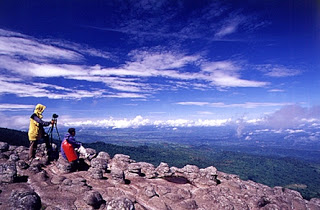
Phu Hin Rong Kla National Park: A beautiful location with a tragic history, this national park is popular for its vast plain of rocky formations. Its uniqueness makes it ideal for productions that would look for deserted and exotic locations, possibly double up for other planets!  


Thung Salaeng Luang National Park: This location can easily double up for Savannah any day. It is vast grassland against a backdrop of high mountains, endowed naturally with pine trees and wild flowers.

This part of Thailand has not been featured extensively in international productions. Few of the international productions shot in Western Thailand include The Man with TheGolden Gun (1974), Werner Herzog’s Rescue Dawn (2007) which starred ChristianBale, Vinyan (2008) and both of the Mortal Kombat movies.   

In the next series, we will cover the Eastern and North Eastern Thailand.

Thailand Location Series: The Northern Beauty

Thailand is increasingly becoming a popular destination for the productions from all over the world. In one of our last blog, we covered reasons for shooting in Thailand despite the lack of incentives. In this new series of blogs, we cover locations from each part of the country.  Many might already know of the locations we will cover. A few we believe are unknown to many of the international location scouts. The series will show that there is more to the country than the notorious nightlife and the beautiful beaches.

We begin with the Northern Thailand. The north of Thailand is geographically a hilly area. There are many national parks, indigenous villagers and rare wildlife and plants. The area is often hailed as the most culturally significant part of Thailand. Chiang Mai is the largest city of this part of Thailand in addition to being the second largest city of the country.

Below are few of the locations

Doi Inthanon Chedi
Doi Inthanon National Park: Imagine for a moment. A beautiful location populated by beautiful waterfalls. All around you can see the source of the rivers. And this location is located at the highest point of the country, at 2,599 meters to be exact. This is Thailand’s most well known national park and one whose beauty make your work more than enjoyable.


Doi Mae Salong plantation
Doi Mae Salong: The area’s plantation doubled for many local and international productions notably American Gangster (2007), Ridley Scott’s helmed project starring DenzelWashington and Russell Crowe. It is however a beautiful tea, coffee and fruit plantations and not drugs as depicted. It has also been featured in many productions for romantic backgrounds.

Wat Chedi Luang
Wat Chedi Luang: This particular location is very popular for local productions for many reasons. The main reason is its location among the beautiful hills. The second is the long staircase with what is believed to be the most beautiful man made methodological serpents rambling from the entrance of the chapel to the door, on both sides of the staircase. For a shoot that covers exotic Thai temple not flanked by the usual skyscrapers of Bangkok, this is total ideal.

Doi Phu Kha
Doi Phu Kha National Park: If you have watched a little known movie titled “The Elephant King”, this location’s beauty will not be of a surprise to you. The pink flowers are in here in this park, Chomphu Phu Kha to be exact. They are in full bloom during February. This location has been a favorite for both local and international productions alike. Permits can be applied for and accommodation services inside the park are available.  

Some of the international productions shot here in Northern Thailand included American Gangster (2007), Rambo(2008), Rambo 3 (1988), Surf Ninjas (1993), Operation Dumbo Drop (1995), TheElephant King (2006), Somewhere (2004), Hot Potato (1976) and Sniper 3 (Video2004).  Northern Thailand has also been featured in the famous TV series “The Amazing Race”. Lost in Thailand(2012), the highest grossing Chinese movie was also shot around in the area. 


In the next series, we will move downward to cover the beautiful locations in the north western.

Top 5 Tips For Filming Abroad

The original post is by Nia Genelis of Global Media Desk for KFTV

As anyone in this industry knows, filming can be a complex business, with obstacles and hurdles to overcome even for the shortest project. Shooting in another country can present very specific challenges as well as rewards, with plenty of research to be done ahead of time.

When done correctly however, venturing beyond your borders can be a once in-a-lifetime event. So how do you ensure a drama-free shoot in a foreign country? The experts at Global Media Desk have put together a list of tips, tricks and advice to make your shoot a complete and total success.

1. Plan ahead

When arranging crews, permits, visas, travel, hotels and other services, book as far in advance as possible. Booking ahead of time will ensure that you get the best rates and save a lot of money.

Also, don’t forget the time difference. If you’re reading this during the daytime in the United States, it is already evening in Europe. And in Asia, it’s already tomorrow. So, if you happen to be organising a shoot in either of these regions, and you’re based in Berlin, you’re already a day behind.

You can look at the KFTV country guides to find time zones of 149 countries around the world, or visit sites such as the Time Difference Calculator.

2. Things you need before you travel

Some countries require visas to be obtained in advance. This process can take anything from one week to one month to complete. KFTV has details on specific visa requirements and where to find them listed country by country. Or you can refer to VisaHQ.

Another vital point to remember before you travel is that voltage and power outlets vary around the world. You should have the right plug adapters and power converters before setting off. Most plug adapters do not convert the power.

Laptops and video cameras usually have built-in converters, but you will need to buy a separate power converter for all other devices. If your voltages don’t match you could end up blowing a fuse. You can find a list of electrical systems around the world here.

3. Go local

By working with local film crews in the country or region you are shooting in, you end up killing two birds with one stone.

First of all, you reduce or eliminate travel expenses considerably, and save on having to ship in large amounts of equipment. This can often incur customs fees, not to mention the hefty extra baggage charges at check-in.

Secondly, and most importantly, you will be working with people who know the local terrain, language, and customs. This kind of local knowledge is the single most effective way of reducing potential problems, because your locally based team will know how to avoid country-specific risks.

4. Know the local laws, customs, do’s & don’ts

Imagine your reaction if your production had to be shut down because you did not get the right permit, or decided to shoot on a major local holiday when everything was closed? What would happen if you chose to shoot on a forbidden location, or didn’t follow the specific local shooting code?

You can spend quite a lot of time researching the filming laws in your destination country, checking with the local film commissions and other government organisations.  Alternatively, hire a local fixer, scout or production assistant who knows the right people and permits, and who can take care of everything prior to your arrival, thus saving you valuable time.

5. Have fun

Don’t forget what a gift it is to travel and to have the opportunity to discover new places and people. If possible, schedule some time to get out there and explore a little.


Your local crew will probably have some great advice on places to visit in the area. Enjoy yourself; you won’t regret it

Why shooting in Thailand without incentives is still an attractive option


In our last post, we mentioned the importance of incentives and how Thailand loses a lot of potential businesses from the big international studios for the lack of it. Yet, there is no denying that the country is still attracting filmmakers from all over the world who find other factors prevalent in the country to be attractive. In this post we will highlight these factors. 

During the one day seminar of the Thailand International Film Festival 2013, many of the guests agreed that Thailand is one of the best places to shoot a movie and some including Mr. Daniel Zirilli and Mr. Andrew Pfeffer (Bangkok Dangerous, Running Scared and etc.) shared their wonderful experiences of shooting their projects here. During their stories, they repeatedly highlighted some of the factors that make Thailand an attractive place to shoot. In this post, we will detail each of the factors and share the experiences from the filmmakers to illustrate how without the incentives, Thailand is still one of the most appealing place to shoot.

Hard working and experienced crew: Daniel Zirilli recounted an incident on one of his earliest shoots in Thailand when heavy equipment was urgently required for a shoot on top of a hill and it was proving to be difficult due to some unforeseen problems. One of the crew members solved the dilemma by lifting the equipment and went all the way to the top without once complaining. This story is one of the many examples of hard working attitude of the locals who are not afraid of working hard and are always ready to brave any kind of situation. Additionally, with many upcoming film production services in the country, more and more people are gaining the valuable experiences and thus become what one of the guests said “the most attractive workforce for film production in the region.”

Locations: When the Chinese government suddenly revoked the permit to film a week prior to shooting, Weinstein Company’s ambitious project Shanghai ran into trouble. They had to walk away from an expensive set and find a new location in a short time. Fortunately for them, Thailand has the locations that can double up for the historical time China and at a lower cost. In other instances, Thailand’s beautiful (and the popular notorious side) beat out Rio to be featured in Hangover 2; and of course the beautiful paradise for Leonardo Di Caprio in TheBeach. The country is no short of having beautiful locations and has in fact been a favorite for many Bollywood filmmakers who increasingly using it to double up for places such as New York, Bahamas, to name a few.


Low cost of production: Thailand as mentioned above was used to double up for many other locations primarily not only because of its beautiful locations, but also of the low cost of production. The production services down here are not only reasonably priced but other factors including logistics and accommodation are among the best and cheapest in the region. Moreover, sets construction is admittedly by many of our clients one of the cheapest at the highest quality in the region. This all contribute to the lower cost for the filmmakers and thus saving costs to a large extent.

Excellent Infrastructure: Thailand’s infrastructure is undeniably one of the best in the region. Many filmmakers find it easy to shoot in Thailand and easy to transportation of the equipment or the crew to locations quickly. In fact we have had finished shoots that take place at 3 different locations in a single day itself!

Professional Production Services: The guests had praised highly of the professionalism of the production services in Thailand and this made us proud. We at Benetone Films had strive to be the best of the crop and we value transparency and honesty highly when servicing the clients.

Friendly atmosphere: Thailand is popularly known as the land of smiles and this is always pleasant for the filmmakers who come back to Thailand again and again to enjoy the hospitality and joy of working with the locals. Moreover, Thai people are gracious and go out of their way to make sure the visitors are comfortable. Mr. Kulthep Narula representing Benetone Films in fact shared how during the 2010 Thai political protests,  the shoot went on without any trouble a mere distance away from the protests. Moreover the protesters were handling out water or refreshments to the crew.

The above factors are one of the other many others to make the filmmakers choose Thailand despite not having incentives. In the end, we welcome you to experience the country for yourself and for any assistance, please feel free to contact us.

The Latest Effort in Luring Filmmakers to Thailand - Thailand International Film Festival 2013


Thailand International Film Destination Festival which debuted from April 1 to April 10 was part of an effort to promote the country’s exotic settings and production facilities to the international screen industry.  Thus it came to no surprise that the movies screened during the festivals were the ones that were filmed in Thailand, headlined of which were the dystopian backpacker film, The Beach and the raunchy comedy, The Hangover 2.


(For the list of the films, click here)

The event included a one day seminar held on April 5th at Centara Grand, Bangkok with two discussion panel sessions, one in the morning and one in the afternoon, with local well known figures from the film production in discussion with the foreign guests. Mr. Kulthep Narula represented Benetone Films which have had experience in the field for over a decade.

The morning session hosted two well known location managers from Hollywood, Mr. Michael John Meehan (Pirates of theCaribbean trilogy, Master and Commander: Far Side of The World, Oblivion and etc.) and Mr. Mike Fantasia (The Amazing Spider-Man, Catch Me If You Can and etc. ), Mr. Daniel Zirilli, a young filmmaker who has directed and/or produced over 250 music videos. The afternoon session hosted producer Mr. Andrew Pfeffer (Bangkok Dangerous, Running Scared and etc.), director and cinematographer Mr. Adam Kane (Formosa Betrayed, multi episodes of Heroes and etc.) and actor, producer and writer Mr. Will Tiao (Formusa Betrayed and etc.)

The local speakers besides Mr. Kulthep were actor, producer and writer Mr. Jude S. Walko and producer Ms. Sasisupa Sungvaribud who is also the president of the Film Production Services Association.

Even though, the sessions were dominated by different concerns, there was however one common issue that was raised and discussed extensively: lack of incentives in Thailand for the foreign productions. All of the guests concurred that while Thailand is an attractive option for the filmmakers, thanks largely to the exotic locations, professional and hard working crew, excellent infrastructure and film production services, its lack of incentives is hurting the business that the country should have been getting.

In our next blog, we will detailed the discussions and explore more on the issue of the incentives.

You can follow Benetone Films at 

Facebook: facebok.com/benetonefilms
Twitter: twitter.com/benetonefilms
Youtube: youtube.com/benetonefilms

Thailand Location Series 2: Phi Phi Islands


Our second post on Thailand locations is on Phi Phi Islands made famous by Leonado DiCaprio starrer TheBeach (2000) and later devastated by the disastrous Indian Ocean Tsunami ofDecember 2004. The island Ko Phi Phi is now almost fully restored and once again seeing an increasing number of shoots thanks to its scenic beauty.

Phi Phi Islands is believed to be one of the oldest communities in Thailand, thanks in large part to the archaeological discoveries dating back to the prehistoric period. The name Phi Phi originates from Malay, however the original name of the islands were Pulau Api-Api (The Fiery Isle) referring to the Pokok Api Api (literally translated as the Fiery Tree) or the Grey Mangroves, commonly found throughout the island.

There are six islands in the group and is part of Hadnopparattara- Koh Phi Phi National Park which is home to an abundance of corals a marine life. Phi Phi Don and Phi Phi Lee are the largest and most well known islands with the latter gaining popularity after being the location for The Beach, Leonardo DiCaprio starrers which depicted the island as the lost paradise.

Benetone Films have also had line produced many commercials and feature films shot in Phi Phi Islands which includes the Bollywood multi starrer Blue and commercial of Spring Tea from Israel as example. 


“The Inherited Marriage” (БРАК ПО ЗАВЕЩАНИЮ) comes to Thailand


We were recently honored to be a part of one of the most popular award winning series of Russia, “The Inherited Marriage” as the line producer in Thailand. The series continue its story in the beautiful locales of Thailand and star the gorgeous Tatiana Arntgolts. This segment of the series is produced by Anastasia Rozhdestvenskaya and directed by Borz Nickolay.

БРАК ПО ЗАВЕЩАНИЮ, Tatyana Arngolts, Татьяна Альбертовна Арнтгольц
The series follow the story of Sandra Seymour and her romantic and exciting journey. It is the second sequel to the popular series which was originally aired way back in 2009 and has accumulated huge fandom across the globe.

The shoot in Thailand was done in multi locations which include a dangerous sequence of the blasting of the car and a sequence shot in Thailand prison. Benetone Films as the line producer handled everything from location scouting, local casting, legal paperwork and other details which were handled professionally and expertly with no hassles to the production. This helped accelerated the work and the shoot was completed in little more than a month itself.

In the end, we received this e-mail from Anastasia and we are happy to know she is satisfied and enjoyed working with our crew.
Татьяна Альбертовна Арнтгольц

“I would like to thank you and Benetone Productions for high quality services and friendly atmosphere that you have provided for my crew in Thailand. I will be more than happy to give excellent references for you to any production house here in Russia and worldwide.  

Best Regards,
Executive producer
Anastasia Rozhdestvenskaya”

For your production needs in Thailand, contact us at info@benetonefilms.com or for any other information relating to shooting in Thailand, drop up a mail!

For behind the scenes album, check out http://on.fb.me/1336r9M

We look forward to hear from you.

Thailand Location Series: Phuket, The Southern Paradise


We will begin with a weekly location series highlighting various locations around Thailand. This week we start with Phuket, one of the most well known destination and many production companies' favorite location to shoot in Thailand. 

Phuket is one of the most popular tourists’ destinations in the world. It is famous for its nightlife, fine dining, beautiful beaches and islands.  Phuket has also been a popular location for film and commercial shoots.

Phuket was formerly known as Thalang and historically been a major trading route between India and China. The region formerly derived its wealth from tin and rubber, however in modern times; the region’s economy is driven by rubber tree plantations and tourism with areas like Patong, Karon and Kata being the most popular ones.

Phuket’s popularity as location shoot is chiefly from the exceptional topography of the region. 70 percent of the area is covered with mountains which stretch from north to south while the remaining 30 percent are plains located in the central and eastern parts of the island. This make it possible to shoot any kind of story in Phuket and with excellent infrastructure of Phuket, it is not difficult for transportation for the crew from the location to the excellent hotels on the island.

Benetone Films has also in the past line produced many feature films and commercials notably Bollywood blockbuster Ek Tha Tiger and Pepsi commercial respectively.

Below you can check out our selected pictures from Phuket. To book a shoot in Phuket, feel free to contact Khun Rachvin at info@benetonefilms.com


Exquisite locations, first class accommodations, solid crew: Thailand has it all and more.


In 2008, Weinstein Company was ready to roll out its latest project titled Shanghai to be shot on location in the Chinese port of the same name when tragedy strikes. The Chinese authorities unexpectedly revoked the permit a week prior to the shooting, which meant the company had to walk away from the sets that had been built at a cost of US$ 3 million. Moreover, they were now forced to look around for a new location that could imitate the Chinese city in addition to building new sets quickly, efficiently and at a lower cost.  

Luckily the solution was not that far away. The production company chose Thailand and discovered that locations like Hua Lamphong Railway Terminal, Si Racha, Chachoengsao and Samut Songkhram, were precisely what they were looking for. The project got underway and by August 2008, the production was wrapped.  

The above incident is one of the many instances where Thailand has been chosen to be a double for well known international places. Other well known examples include: Ridley Scott choosing Chiang Mai to shoot parts of 2007’s American Gangster, as did Sylvester Stallone for his fourth installment of Rambo in the same year; Werner Herzog’s PoW drama Rescue Dawn cheated Thailand for Vietnam in 2005.


This tactic has not been limited to feature films alone. Many of the international commercials have been shot in Bangkok and surrounds, with the city doubling as New York, Medieval Europe, modern China and New Orleans. This award winning commercial from Acer (China), which we at Benetone Films had a pleasure of working with; cheated the streets of Bangkok as one of the busy streets of a Chinese metropolitan city. Our work with UOB commercial showcases a high upper class international feel closer to Europe which was once again shot in Thailand!

Of course, international producers are not turning to Thailand on the strength of its beautiful locations alone. The other reasons that make Thailand such an attractive place for shooting are its versatility, flexibility, modern infrastructure and its cheap, experienced and hard working crew. Additionally, the local officials are churning out incentives making shooting in the country more attractive than ever. 

Benetone Films itself in the recent years has been seeing more and more commercials being shot here in Thailand. Our clients from US, Indonesia, India, Israel, China and etc. share the same sentiments to the attractiveness of Thailand and have been coming back to shoot with us again and again citing services from a leading production company like us as another highlight of working in Thailand.

Truly there exist no boundaries in Thailand to unleash your imagination and making your vision come true.
To work with us in bringing your vision to life, please feel free to contact Khun Kulthep or Khun Rachvin at contact@benetonefilms.com

You can also look at more commercials which were line produced by us at our YouTube Channel

Post Ads (Documentation Required)

Author Info (Documentation Required)